
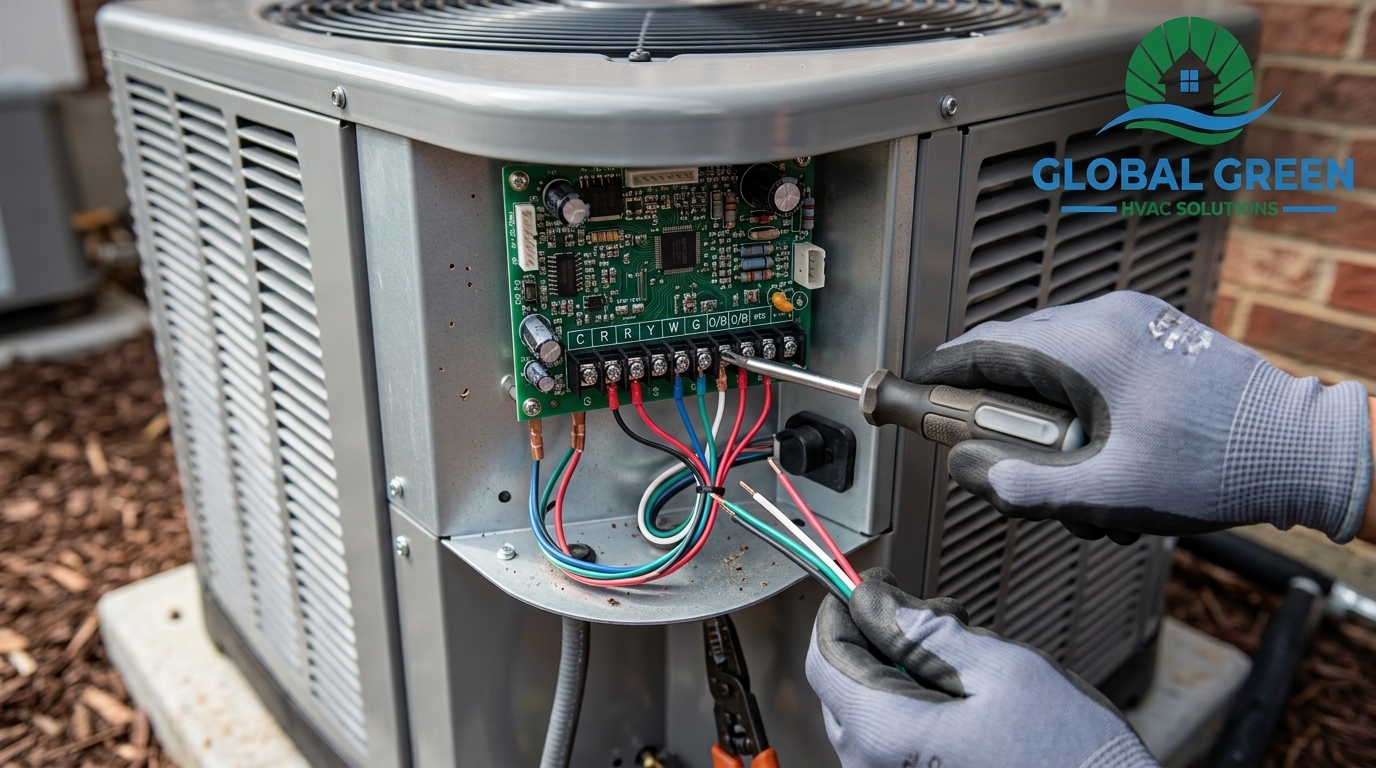
A zoned HVAC system divides a home into areas that each get their own thermostat: motorized dampers in the ducts open and close to send air where it is called for, or separate ductless heads serve each zone. Zoning suits multi-story homes, rooms with big windows and households with different comfort needs, and it needs ducts sized for it. See HVAC repair if an existing zone stops working.
An HVAC Contractor specializing in custom zoning and smart climate integration transforms how luxury properties in Woodland Hills, California, manage multi-room temperature control. Sprawling multi-level homes, hillside architectural estates, and properties with expansive glass walls across Woodland Hills, Hidden Hills, and Calabasas present distinct heating and cooling challenges. Standard single-thermostat climate setups often struggle to maintain uniform comfort across large square footage, leading to hot upper floors, cold lower levels, and excessive energy waste in unoccupied rooms.
By implementing advanced multi-zone distribution networks, variable refrigerant flow (VRF) technology, and smart communicating controls, a qualified mechanical specialist tailors airflow directly to your family’s daily lifestyle. Designing a zoned climate ecosystem optimizes indoor comfort, gives each family member individual temperature preferences, and keeps seasonal energy usage under control.
The Science Behind Multi-Zone Air Distribution
Traditional central air systems deliver a single volume of conditioned air across every duct vent in the home, regardless of whether a room is occupied or exposed to direct sunlight. Zoned climate architecture reimagines this dynamic by dividing your floor plan into independent comfort zones.
Motorized Bypass and Supply Dampers
In a ducted zoned setup, motorized air dampers are installed directly inside the main supply duct branches. Each zone communicates with its own dedicated room thermostat or sensor. When a specific room reaches its target temperature, its corresponding duct damper modulates closed, redirecting conditioned air into active zones that require cooling or heating.
Variable-Speed Inverter Blower Calibration
Zoning works best when paired with variable-speed blower fans and modulating compressors. If a single room calls for cooling in a multi-zone home, traditional single-stage equipment would blow 100% capacity into that single branch, creating loud air rush noises and high static duct pressure. Variable-speed equipment automatically dials down fan speed and refrigerant flow to match the exact airflow volume needed for active zones.
Eliminating Solar Gain and Micro-Zone Imbalances
Homes built along the south-facing hillsides of Woodland Hills experience massive solar heat gain through large west-facing and south-facing windows during afternoon hours. Meanwhile, north-facing bedrooms remain shaded and cool. Zoning balances these microclimates automatically, sending increased cooling capacity to sun-drenched rooms while preventing shaded areas from becoming uncomfortably cold.
Modern Technologies Powering Smart Home Integration
Integrating modern climate infrastructure with home automation platforms unlocks unprecedented control, diagnostic visibility, and energy management:
- Communicating Smart Thermostats: Advanced digital interfaces that constantly exchange diagnostic data, such as fan RPMs, refrigerant pressures, and humidity levels, with the indoor air handler rather than relying on basic on/off signals.
- Wireless Remote Sensor Networks: Discreet room sensors placed in bedrooms, home offices, and entertainment suites that average ambient temperatures or prioritize cooling based on occupancy sensors.
- Ductless Multi-Zone Mini-Split Arrays: Sleek wall-mounted, ceiling cassette, or slim-duct indoor units powered by a single outdoor inverter unit, providing complete room-by-room independence without requiring extensive attic ductwork.
- Geofencing and Automated Scheduling: Smart control platforms that adjust indoor temperatures automatically when family members leave home, pre-cooling living areas just before they return to maximize energy savings.
Comparing Single-Zone Systems vs. Smart Multi-Zone Architecture
Review this direct technical comparison to evaluate how custom zoning elevates home comfort over standard single-thermostat setups:
| Comfort & Control Parameter | Standard Single-Zone System | Smart Multi-Zone Custom Architecture |
|---|---|---|
| Temperature Control | Single master thermostat controls entire house | Independent, customized temperature settings for each zone |
| Air Distribution Strategy | Equal airflow delivered to all vents simultaneously | Airflow dynamically directed only to occupied/calling zones |
| Upper vs. Lower Level Balance | Severe temperature split (upstairs hot, downstairs cold) | Balanced temperatures across all floors and architectural wings |
| Energy Consumption Profile | Heats or cools empty rooms unnecessarily | Saves energy by reducing output to unoccupied spaces |
| Noise Levels | Loud air rushes during full-capacity cycles | Quiet, whisper-soft operation via modulating fan speeds |
Frequently Asked Questions About Custom Climate Zoning
Can custom zoning be retrofitted into my existing home’s ductwork?
Yes. In many cases, an experienced trade specialist can retrofit motorized duct dampers, a zone control panel, and smart room sensors into your property’s existing duct network. However, a technician must first evaluate your duct sizing and static pressure limits to confirm your system can accommodate zoned airflow modulation without causing backpressure.
What is the ideal number of zones for a large home in Woodland Hills?
The number of zones depends on your home’s architectural layout, story count, and daily usage patterns. Typical luxury residential designs feature 3 to 5 distinct zones: grouping master suites into one zone, guest bedrooms into another, main open-concept living areas into a third, and remote home offices or guest casitas into dedicated independent zones.
How does smart climate zoning help lower seasonal power bills?
Zoning allows you to avoid wasting energy cooling or heating unoccupied areas of your property. For example, during nighttime hours, cooling capacity can be focused exclusively on occupied bedroom zones while dialing back cooling in empty living rooms and kitchens, reducing compressor work and electric utility expenses.
Are ductless mini-splits better for zoning than ducted damper systems?
Both options excel in different scenarios. Ductless mini-splits offer absolute room-by-room isolation and zero duct heat loss, making them perfect for room additions, home theaters, or garage conversions. Ducted damper systems are ideal when you want discrete, hidden air registers throughout primary architectural spaces while still enjoying multi-zone control.
Elevate Your Home Comfort with Global Green Solutions
Designing and installing a custom-zoned climate system requires an experienced trade partner who combines thermodynamic engineering with modern smart home integration skills. At Global Green Solutions, we have earned our 4.9-star reputation across Woodland Hills, Hidden Hills, Calabasas, and Tarzana by crafting tailored climate systems that deliver whisper-quiet comfort and total temperature control.
We take the time to evaluate your estate’s architectural layout, window orientations, and family routine to design a multi-zone setup engineered for your lifestyle. From installing variable-speed inverter equipment and motorized dampers to configuring smart communicating controls, our certified technicians execute every detail with trade precision. We back our craftsmanship with clear flat-rate proposals, comprehensive labor guarantees, and complete 10-year manufacturer warranty protection.
Take total command of your home’s indoor climate today. Contact our expert design team to schedule your custom zoning and smart comfort consultation!
- Company Name: Global Green Solutions
- Office Location: 20746 Clarendon St, Woodland Hills, CA 91367
- Phone Number: +1 310-507-7172
- Availability: Open 24 Hours
- Google Maps: https://maps.app.goo.gl/amYzk7qnQQPLwSeD8