

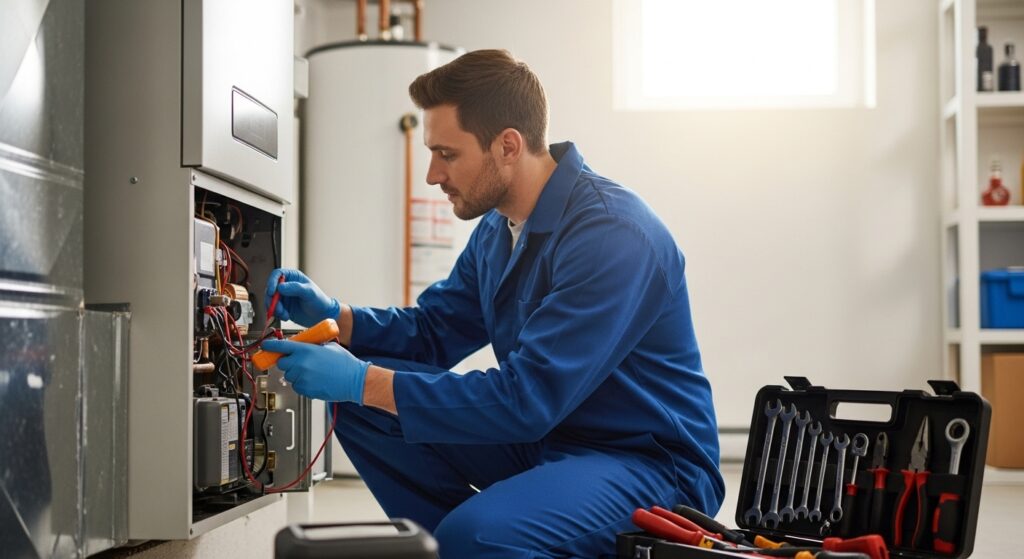
When your heater stops working or isn’t keeping your home comfortable, most homeowners wonder what actually happens once a professional arrives. A common question we hear is:
What does a heating repair contractor typically inspect first?
As the owner of Global Green Solutions, I believe homeowners in Woodland Hills, CA deserve transparency. Understanding how a heating contractor approaches a repair not only builds trust—it helps you recognize when you’re working with a true professional.
Here’s how a proper heating inspection usually begins.
The First Priority: Safety Checks
Gas, Electrical, and Carbon Monoxide Risks
Before anything else, a qualified heating repair contractor focuses on safety. This includes checking:
- Gas connections for leaks
- Electrical components for damage
- Signs of carbon monoxide exposure
If you’re searching for a heating contractor near me, safety-first procedures are non-negotiable.
Thermostat and Control System Evaluation
Making Sure the System Is Communicating Properly
Next, the contractor verifies:
- Thermostat settings and calibration
- Wiring connections
- Signal communication between components
Many heating problems stem from control issues—not the furnace itself—making this an essential early step.
Airflow and Filter Inspection
Restricted Airflow Is a Common Root Cause
A heating contractor will inspect:
- Air filters
- Return vents
- Blower operation
Poor airflow can cause overheating, short cycling, and uneven heating throughout the home. Addressing this early prevents unnecessary repairs.
Internal Component Inspection
Burners, Ignition, and Heat Exchanger
Once external checks are complete, the contractor moves inside the unit to inspect:
- Ignition system
- Burners and flame quality
- Heat exchanger condition
These components directly impact heating performance and safety, especially in older systems common in Woodland Hills homes.
System Performance Testing
Confirming the Diagnosis
Finally, a professional heating contractor will:
- Measure temperature rise
- Test system cycling
- Confirm efficient operation
This step ensures repairs address the real issue—not just the symptoms.
Why This Inspection Order Matters
A structured inspection:
- Prevents misdiagnosis
- Saves time and money
- Avoids unnecessary part replacement
- Improves long-term system reliability
If a contractor skips steps or jumps straight to selling replacements, that’s a red flag.
Frequently Asked Questions About Heating Repair Inspections
1. Why does a heating contractor check safety first?
Because gas and electrical issues can be dangerous if left unaddressed.
2. Can thermostat issues really cause heating problems?
Yes. Faulty thermostats are one of the most common causes of heating failures.
3. How long does a heating inspection take?
Most professional inspections take 45–90 minutes, depending on system complexity.
4. Will the contractor explain what they find?
A reputable heating contractor should clearly explain all findings and options.
5. Is a heating contractor near me familiar with local systems?
Local contractors understand the heating setups common in Woodland Hills homes.
Need a Trusted Heating Contractor in Woodland Hills, CA?
If you’re searching for a heating contractor near me and want honest diagnostics—not guesswork—we’re ready to help.
Global Green Solutions
📍 20746 Clarendon St, Woodland Hills, CA 91367, United States
📞 310-507-7172
We take the time to inspect, explain, and recommend what’s truly best for your home.
👉 Call now or get directions on Google Maps to speak with a trusted local heating expert.