
There is a certain rhythm to summer in Woodland Hills. You wake up to calm air, you plan your day around the rising heat, and by late afternoon you are grateful for a steady, cool home. That rhythm breaks the moment your AC stumbles, and in this part of the San Fernando Valley, it does not take long for a small hiccup to turn into a sweaty evening. That is why the difference between a quick DIY attempt and a professional diagnosis is more than convenience—it is the difference between temporary relief and lasting reliability. In my experience working with local families and small businesses, starting with professional AC repair pays back in comfort, safety, and long-term performance.
Woodland Hills is famous for its hot spells, and equipment here runs longer and harder than it does in cooler coastal neighborhoods. Extended runtime exposes weaknesses quickly: marginal electrical connections, dirty coils, imperfect ductwork, and weak capacitors reveal themselves during the first heatwave. A trained technician reads those signs faster and more accurately, not by guessing, but by measuring. That difference—data over hunch—keeps you from replacing parts you do not need and missing the ones you do.
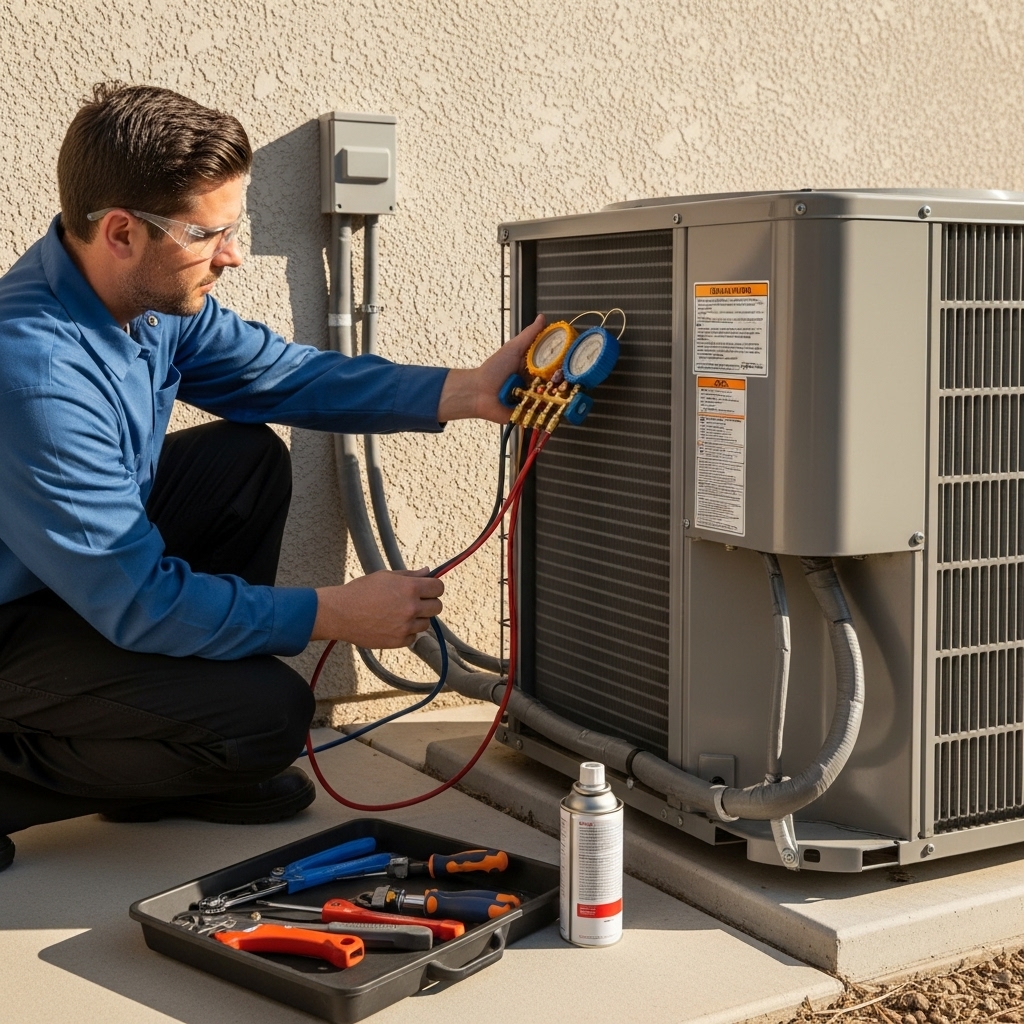
The temptation to try a quick fix is understandable. Filters are simple, thermostats look approachable, and YouTube offers endless advice. But the most expensive problems I see often begin with well-intentioned tinkering that overlooks the system’s balance. Refrigerant charge, for example, is not a matter of adding a can until it feels cold. Charge interacts with indoor and outdoor coil temperatures, airflow, and the specific refrigerant in your system. Professionals test superheat and subcooling and compare them to target values for the conditions. That precision makes the difference between a system that merely turns on and one that runs efficiently for years.
Safety, Codes, and the Realities of Modern Equipment
Professional repair matters because HVAC is a building system, not just an appliance. It ties into electrical service, structural elements, and indoor air pathways. Working safely means respecting those connections. Outdoor disconnects and breakers must be sized correctly; wire insulation must withstand heat and vibration; condensate drains must be routed and trapped to prevent overflows. In Woodland Hills, where attics bake in the summer, materials are under constant thermal stress. A pro knows how to secure components so that vibration does not loosen them the first time the unit cycles hard on a 102-degree afternoon.
There is also the matter of refrigerants and environmental rules. Handling refrigerant requires certification, and for good reason. Improper recovery contaminates the air, and incorrect charging reduces performance while straining the compressor. Technicians trained on current refrigerants understand the pressure-temperature relationships, the correct metering device behavior, and how to evaluate a system’s performance without guesswork. With newer standards and the shift to updated refrigerants across the industry, that expertise is becoming even more critical.
Diagnostics That Look Beyond the Obvious
Professional diagnostics look at the big picture. If the system is short cycling, is the cause a thermostat location, low charge, restricted airflow, or a failing high-pressure switch? Each fix is different, and a replacement part will not solve the root cause if it is misdiagnosed. In the field, a technician will test static pressure across the air handler, inspect the blower wheel, check temperature split, and measure voltage and amperage at startup. These numbers tell a story, and that story determines whether your system needs a cleaning, an electrical repair, a control update, or a refrigerant adjustment.
One local family thought they needed a new thermostat because the temperature kept drifting. In reality, a sunlit hallway skewed the readings every afternoon. The pro moved the thermostat and adjusted the system’s fan settings to improve circulation, and the drift disappeared. Had they replaced the thermostat without addressing the location, the problem would have persisted. This is the kind of context that separates professional repair from trial and error.
Efficiency, Comfort, and Bills You Can Predict
Woodland Hills heat is unforgiving of inefficiency. Professional repair focuses on returning your system to its designed performance so that your comfort is stable and your energy use is predictable. Clean condenser coils exchange heat with the outdoor air effectively; clean evaporator coils remove heat indoors without icing; ducts sealed at the joints deliver air where it is needed. When a technician balances blower speed to your duct system and verifies refrigerant charge, you feel the result immediately: rooms cool evenly, the system cycles off instead of running endlessly, and hot spots shrink.
Mid-season attention is especially valuable here. Heat waves tend to reveal hidden weaknesses. Having a professional check your electrical components, verify line temperatures, and test the condensate system can prevent the chain reactions that lead to inconvenient breakdowns. At the midpoint of the season—after the first long run hours—schedule a performance review and targeted AC repair so minor issues do not become major ones right when you need cooling most.
Protecting Your Equipment and Warranty
Many manufacturers require professional service documentation to maintain warranties on compressors and coils, especially within the first years of equipment life. That is not just paperwork; it reflects the reality that correct service extends equipment life. Verifying that electrical components are within tolerance, that the airflow meets the design, and that refrigerant levels are not drifting outside spec protects the compressor—the most critical and stressed component in your system. When the record shows that your system has been maintained by a trained professional, you stand on solid ground if a major part fails under warranty.
Even outside formal warranty periods, professional care prolongs serviceable life. The difference between a system that limps through eight summers and one that runs reliably past fifteen is largely about maintenance and repair quality. Woodland Hills demands more from your AC than milder climates do. That demand magnifies the benefit of getting the fundamentals right every single season.
Indoor Air Quality and Everyday Health
Professional repair intersects with indoor air quality in ways you may not expect. A frozen coil can trap moisture and create conditions for microbial growth. A poorly sealed return can pull air from dusty spaces, bypassing your filter. A sagging filter rack lets unfiltered air into the system, coating the coil and blower wheel. Techs who examine the system holistically can correct these issues while addressing your immediate symptom. The result is cleaner air, fewer particulates, and a home that simply feels better to breathe in—important in a region that occasionally contends with wildfire smoke.
Air movement also influences how you experience temperature. Properly balanced airflow reduces stratification, especially in two-story homes where upstairs rooms run hotter. Sometimes the fix is as simple as adjusting dampers or adding a return in a stagnant area. Other times, duct sealing and a blower speed change are the difference. These are not dramatic repairs, but they are professional ones—the kind grounded in measurements and craftsmanship.
Real Scenarios from the Valley
On a cul-de-sac near Mulholland, a homeowner kept replacing fuses at the outdoor unit. A professional found that a failing condenser fan motor was drawing high amperage and that the contactor was pitted, causing arcing. Replacing both and confirming proper voltage drop at startup solved the issue and prevented a compressor failure. The homeowner had tried swapping the fuses twice, which restored operation for a day each time, but the root problem remained. This is a classic case where professional diagnosis prevented a cascade of failures.
Closer to Warner Center, an office suite struggled with uneven cooling and noisy supply registers. A tech measured static pressure and found that the duct system was undersized for the blower speed. By adjusting the fan tap and sealing leaks at several branches, the noise dropped and temperatures evened out. Employees noticed less draftiness and fewer hot spots near windows. Without those measurements, any fix would have been guesswork.
When Speed Matters, Accuracy Matters More
Nobody wants to wait days in the heat for help, and in busy seasons, scheduling can feel like a race. But speed without accuracy wastes time and risks your equipment. The right professional shows up ready to test, not just look. They carry the instruments to read pressures, temperatures, and electrical data, and they know how to interpret those numbers for your specific system. That is how a single visit can return your home to comfort and leave you with a system that uses energy wisely.
Of course, professionalism is not only about tools. It is about communication—explaining the findings, presenting options, and helping you plan both immediate repairs and future improvements that match your home and budget. When you understand why a part failed and how the repair restores balance, you are less likely to face the same issue again.
FAQs: Professional AC Repair in Woodland Hills
Why should I avoid DIY refrigerant work?
Refrigerant handling requires certification and precise measurements. Overcharging or undercharging stresses the compressor and reduces efficiency. Professionals measure superheat and subcooling and verify airflow to set charge correctly, protecting your system and performance.
How often should I have a professional look at my AC?
At least annually before peak heat, with a mid-season check if the system runs long hours. Woodland Hills heat exposes weaknesses quickly, so catching them early maintains comfort and prevents compounding wear.
What tools do pros use that make a difference?
Manifolds or digital gauges, temperature probes, clamp meters, static pressure kits, and sometimes diagnostic sensors that log data. These tools reveal performance under real conditions, guiding accurate repairs.
Can a professional fix improve air quality?
Yes. Sealing returns, correcting filter fit, cleaning coils, and restoring proper drainage all improve indoor air quality. Balanced airflow reduces dust and helps your filter capture more particulates.
Do professional repairs really extend equipment life?
They do. Keeping electrical and mechanical components within spec reduces heat and stress, which are the enemies of longevity. The result is fewer breakdowns and a longer service life.
What if my system is old—should I still repair?
An honest technician will assess condition and performance. If a repair restores safe, efficient operation and the rest of the system is sound, repair makes sense. If failures are cascading, planning for replacement may be smarter. The key is informed evaluation, not guesswork.
When the heat rises over the Santa Monica Mountains and settles across the Valley, reliable cooling is non-negotiable. If your system is acting up, choose clarity and confidence over trial and error. Schedule professional AC repair and give your home the kind of precise, measured care that keeps comfort steady all summer long.