
If you’ve spent a summer in Woodland Hills, you know how quickly a small AC issue can turn into a big problem. Our heat doesn’t give cooling equipment much time to recover, and a system that’s slightly out of tune on Monday can feel overwhelmed by Friday. As a local technician, I’ve seen patterns emerge in the kinds of repairs our neighborhood homes need. Understanding those patterns helps you spot early signs, explain what you’re experiencing, and get the right fix the first time. If you’re dealing with a problem right now, reaching out to a trusted local team that handles AC repair can save you from a frustrating week of trial and error.
Air conditioning is a system of systems—airflow, refrigerant dynamics, electrical controls, and the environment around the equipment. When any piece falls behind, the others strain to compensate. Woodland Hills adds its own twist with long stretches of heat, dust carried on dry winds, and homes that mix original ductwork with modern upgrades. The most frequent problems we repair here share common threads, and once you see them, you’ll understand why certain symptoms show up together.
Short Cycling on Hot Afternoons
Short cycling—when the system starts and stops rapidly—shows up often during late afternoon heat. It can be caused by an oversized system, but in Woodland Hills it’s frequently linked to airflow and electrical issues. A dirty evaporator coil or a clogged filter makes the system struggle to move enough air, which leads to frost forming on the coil and safety controls stepping in. Weak capacitors can also prevent the compressor or fan from starting smoothly, causing abrupt shutdowns. The result is a house that never quite cools and a system that sounds like it’s working harder than it should.
Fixing short cycling starts with a thorough cleaning and airflow check. We confirm temperature split at the coil, evaluate static pressure, and verify capacitor performance. Once airflow is restored and components are healthy, run time stretches out into steady, quiet operation. That’s what you want in the Valley heat—consistency, not bursts.
Frozen Evaporator Coils
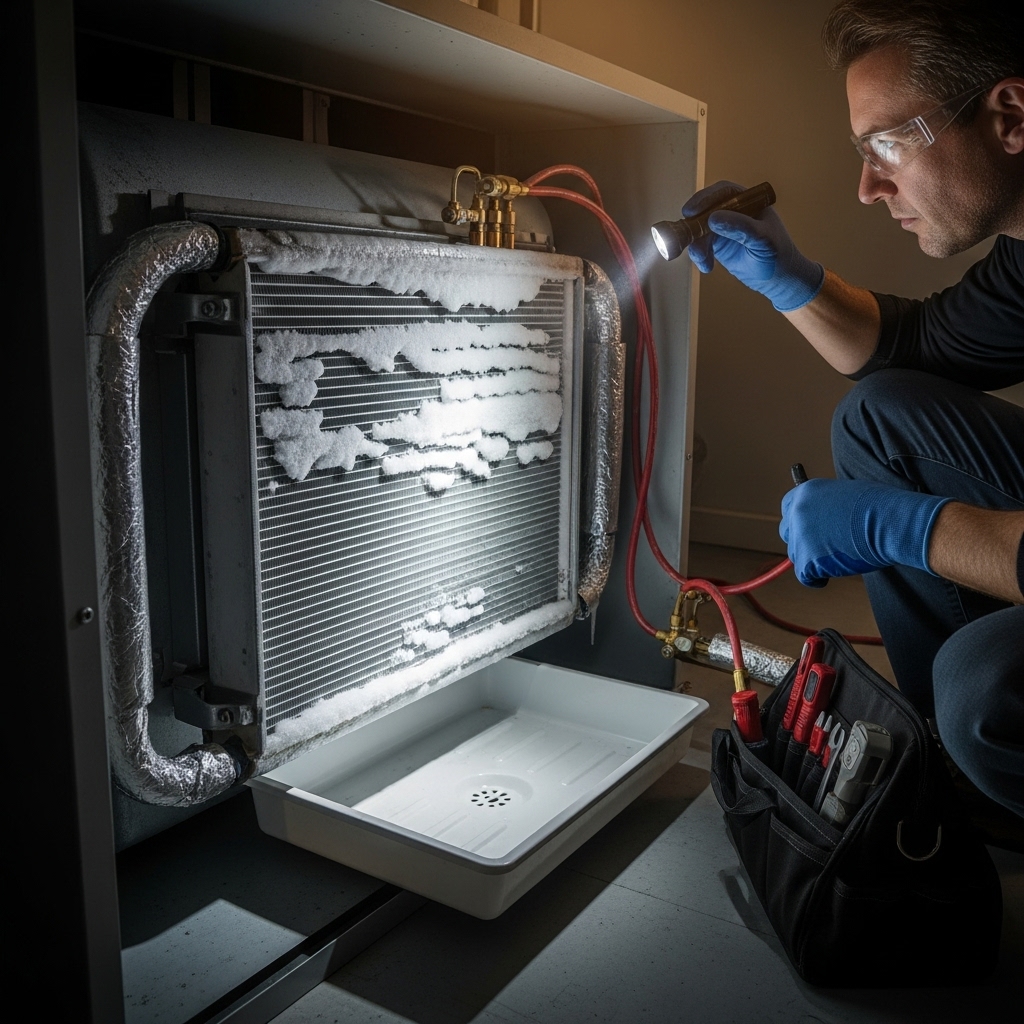
Frost or ice on the indoor coil is a symptom, not a cause. It tells us that either airflow is low, refrigerant is low, or both. In Woodland Hills, we often trace icing to dirty filters and coils compounded by long run times. The system can limp along for a while, but ice chokes airflow further and spirals into a full shutdown. You might notice weak airflow at vents, a cool-but-not-cold feel, or water around the air handler as ice melts when the system shuts off.
Our repair process melts the ice safely, cleans the coil, resets airflow, and then checks refrigerant levels the right way. If we find a leak, we’ll locate and address it before rebalancing the charge. The goal is to stop the cycle, not just thaw it and hope for the best.
Water Around the Air Handler
Water near the indoor unit is a common summertime call. Condensate lines clog with algae, especially in attics where heat encourages growth. When the line backs up, float switches may stop the system, or water can overflow into a secondary pan. In some homes, we discover drain lines with poor slope or long horizontal runs that invite slow flow and sediment buildup. The fix is straightforward: clear the line, verify slope, consider cleanout access, and confirm safety switches work. In Woodland Hills attics, we also check insulation around the drain line to prevent sweating that can drip and masquerade as a leak.
Once drains are healthy, we talk about simple habits—periodic checks, keeping the area around the air handler clear, and calling early if you see or hear gurgling.
Weak Airflow at the Vents
When cool air seems weaker than it used to, the cause is often hidden in the ductwork or at the coil. Duct leaks in hot attics are common in older Woodland Hills homes, bleeding conditioned air into a space you never feel. Kinked flex duct, crushed runs from storage, or closed dampers can also restrict flow. Inside the air handler, dust on the blower wheel and coil can combine to choke airflow slowly enough that you don’t notice until a heat wave tests the system.
Repairs focus on cleaning the blower wheel and evaporator coil, sealing and supporting ducts, and confirming the system’s external static pressure is within spec. We also adjust fan speed to match the home’s needs. The result is stronger, cooler air at the registers and a system that doesn’t sound like it’s straining.
Electrical Failures Under Peak Load
Late afternoon is when weak electrical components reveal themselves. Capacitors that are marginal at 10 a.m. can fail by 3 p.m. when temperatures climb and demand spikes. Contactors with pitted surfaces stick, causing the condenser to behave erratically. Loose connections heat up and trip breakers. Woodland Hills’ long hot stretches keep components warm for hours, and that steady heat is tough on anything that’s already worn.
Our repair approach includes testing under load, not just at rest. We measure amperage, inspect for heat discoloration, and replace weak components before they fail completely. We also look at how the outdoor unit is placed; if it’s in a corner where hot air recirculates, we’ll suggest ways to improve ventilation so components don’t bake in their own exhaust.
Noisy Operation and Vibration
Changes in sound are early clues. Rattles can indicate loose panels, while high-pitched tones might come from a blower wheel that’s dirty or out of balance. Grinding or screeching suggests a motor bearing issue that needs attention now. In condensers, bent fan blades or loose mounting can create vibrations that travel into the house. Because many Woodland Hills lots place condensers near patios, noise is more noticeable and more disruptive.
We quiet systems by cleaning and balancing moving parts, tightening mounts, and isolating vibration transmission. Restoring the soft, steady hum of a healthy system is one of the most satisfying results of a good repair.
Thermostat and Control Issues
Sometimes the issue isn’t in the equipment at all—it’s in how the system interprets the house. Thermostats placed in direct sunlight or near supply vents read temperatures poorly and cause over- or under-cooling. Advanced thermostats left on aggressive schedules can create rapid cycling that feels like a persistent problem. During troubleshooting, we evaluate thermostat location, settings, and wiring. A small change in placement or configuration often smooths out operation and reduces nuisance calls.
For homes with zoning or ductless heads, control coordination is just as important. We ensure that zones aren’t competing with each other and that sensors are reading realistic room conditions.
Refrigerant Leaks and Performance Drift
Refrigerant doesn’t get used up; it escapes. Slow leaks can take months to show up as a vague decline in performance. You might notice longer run times, air that’s cool but not crisp, or a system that can’t quite hold setpoint on the hottest days. In Woodland Hills, where the system runs often, those hints can surface sooner. We use proper detection methods to find and fix the leak, whether it’s at a flare fitting, a rubbed line, or a coil. Only after the leak is corrected do we dial in the charge. That’s the difference between a temporary improvement and a lasting repair.
It’s also important to note that incorrect charge—too much or too little—can mimic other problems. That’s why professional measurements matter; they keep us from chasing symptoms.
Condenser Placement and Heat Recirculation
The outdoor unit’s environment matters more than most people realize. If a condenser sits in a recessed corner, under a low overhang, or behind dense shrubs, it can pull in air it just heated and run hot all day. In Woodland Hills’ triple-digit stretches, that’s a recipe for poor performance. We look at clearance, the direction of the fan’s exhaust, and nearby surfaces that radiate heat in the afternoon. Even small adjustments—trimming plants, redirecting exhaust, improving shade without blocking airflow—can reduce head pressure and make the system feel stronger.
When the outdoor coil is clean and the unit breathes freely, you’ll often notice a drop in noise, too. The system doesn’t have to work as hard to move heat, so the fan settles into a smoother rhythm.
Persistent Hot Rooms
Every neighborhood has homes with one room that refuses to cooperate. In Woodland Hills, it’s often an upstairs bedroom or a bonus room over the garage. The cause might be duct layout, insulation gaps, or solar gain through windows. We approach these rooms as their own mini-projects, diagnosing airflow, sealing leaks, and sometimes adding small, targeted solutions to bring them into line. The goal is to end the daily routine of avoiding certain spaces in the afternoon.
Solving hot rooms relieves the main system, too. When one area is always behind, the AC runs longer trying to pull everything to setpoint. Fix the outlier, and the whole home settles into smoother operation.
Preventing Problems with Simple Habits
While this article focuses on repairs, prevention is part of the story. Clean filters, clear space around the outdoor unit, and reasonable thermostat settings will make many of these issues less likely. A professional check before peak heat is the best insurance you can give your system. It allows us to spot the weak links and correct them before they break under the pressure of a long, hot week.
If you’re not sure whether a sound or behavior is normal, take a moment to note when it happens and what the weather was like. Those details guide diagnostics and make your service visit more efficient.
FAQ: Frequent AC Problems in Woodland Hills
Why does my AC run but not cool well on the hottest days?
It’s often a combination of airflow restriction, dirty coils, and high outdoor temperatures pushing the system to its limits. Cleaning, charge verification, and ensuring the condenser has breathing room usually restore performance.
What causes the breaker to trip in the afternoon?
Components under stress—weak capacitors, loose connections, or high head pressure—draw more current as heat peaks. We identify the component and condition causing the overload and correct both so the problem doesn’t return.
How can I tell if I have a refrigerant leak?
Signs include longer run times, reduced cooling at the vents, and icing on the evaporator coil. We confirm with proper testing, locate the leak, repair it, and then balance the charge to manufacturer specifications.
Is water around the indoor unit normal?
No. It’s a sign that the condensate drain is blocked or misrouted, or that insulation on the drain line is missing, causing sweating. Shut the system off and schedule service to prevent damage.
Why is one room always warmer?
Hot rooms usually stem from duct issues, solar gain, or insulation gaps. We diagnose the specific cause and correct airflow or insulation so the room joins the rest of the home in comfort.
Can noise indicate a serious problem?
Yes. New rattles, humming, or squealing are early warnings. Addressing them quickly prevents wear from spreading to other components and often makes the system feel new again.
Ready to Get Your AC Back on Track?
If your system is short cycling, icing, leaking, or just not keeping up with our Woodland Hills heat, it’s time for a focused, professional diagnosis and a repair that addresses the cause—not just the symptom. We’ll listen to your observations, measure what matters, and restore the steady, quiet cooling you count on. When you’re ready, connect with local experts who handle dependable AC repair so your home can stay cool and calm through the longest hot spells.