
What breaks most in Woodland Hills heat
Summers in Woodland Hills have a particular intensity. Afternoons stretch hot and long, nights cool down slower than you would expect, and even the breezes can carry a dry warmth that seems to hover around homes well after sunset. In these conditions, air conditioners put in serious work. It is no surprise, then, that certain repair issues crop up repeatedly once the valley tips into the long, hot middle of the season. Knowing what those issues are—and how they show up—helps you act early and keep your home comfortable. If you are beginning to look for professional help, this local resource for keyword can give you a sense of how a thorough repair visit tackles these familiar problems.
Think of the AC system as an orchestra that must play in tune while standing in the sun. When one instrument drifts off key, the whole performance suffers. The blower, the condenser fan, the compressor, the coils, the thermostat, and the ductwork all have to synchronize. Woodland Hills heat is especially unforgiving because it forces each piece to work at the edge of its range. That pressure reveals weak parts early and magnifies small misalignments until you feel them as rooms that do not cool, noises that you do not remember, or cycles that start to run long and ragged.
Run capacitors that fade under heat
One of the most common mid-summer failures is a run capacitor that has drifted out of spec. Capacitors give motors the torque to start and the stability to run smoothly. When temperatures soar, a weak capacitor can no longer support the motor, so you see slow starts, the outdoor fan stalls, or the compressor trips the breaker at startup. Sometimes the symptom is subtle: the system seems to start but airflow feels weak and the unit grows quieter sooner than it should. Addressing capacitors promptly keeps motors cool, reduces current draw, and prevents collateral damage to contactors and windings.
Condenser coils matted with dust and debris
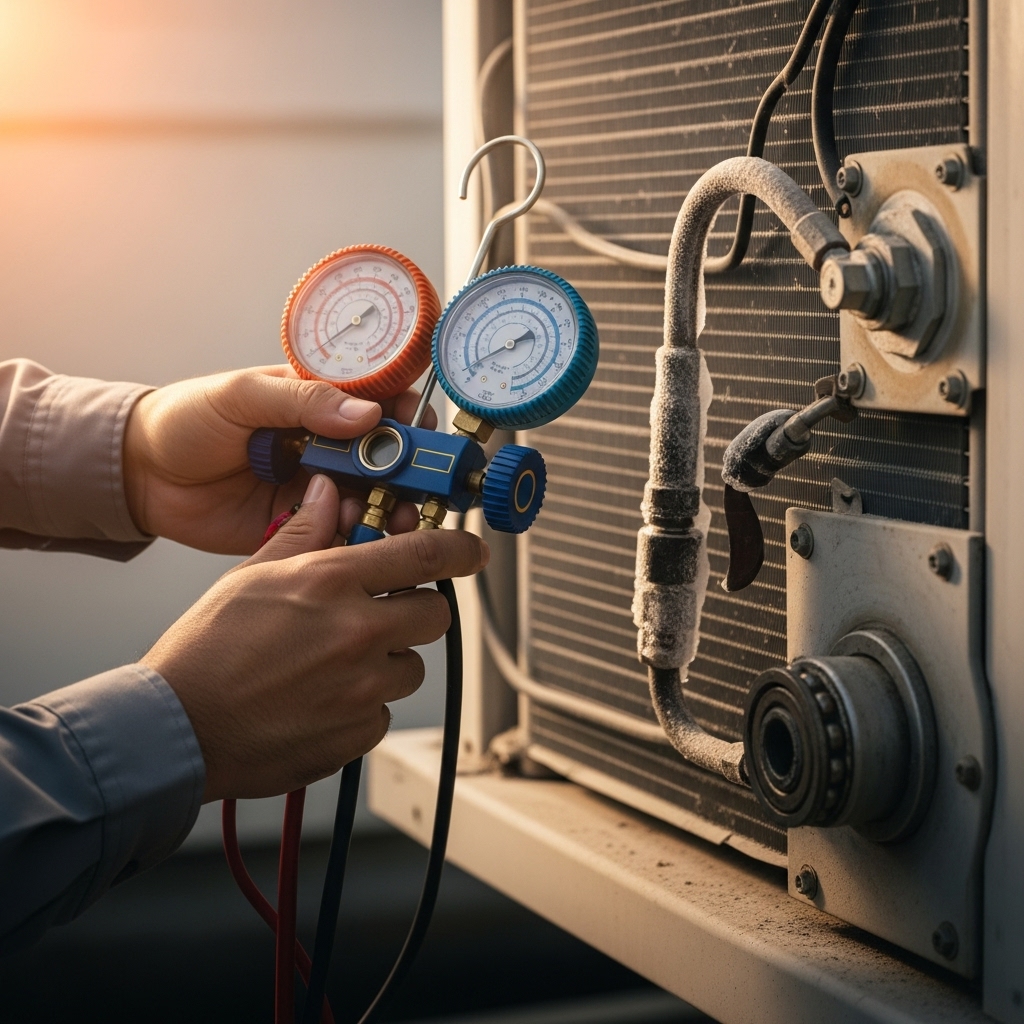
Dry winds carry dust, pollen, and light leaves into condenser fins, where they collect and harden into a layer that blocks airflow. As the condenser loses its ability to reject heat, head pressure rises and the compressor runs hot. Left alone, this shows up as loud starts, longer cycles, and eventual high-pressure trips. A careful coil cleaning that protects delicate fins, paired with checks of fan motor health, restores the condenser’s heat-shedding ability and returns pressure to normal ranges.
Fan motors and bearings pushed to the limit
Condenser and blower motors endure long hours in hot housings, and their bearings tell the tale first. You may notice a grinding or whining tone that was not there in May but grows more insistent by July. As bearings dry and tolerances widen, motors draw more current and produce more heat—a loop that leads to abrupt failure. Replacing worn motors before they seize prevents shutdowns on the hottest afternoons and preserves other parts from the extra stress that comes when airflow falters.
Refrigerant leaks that announce themselves as slow fades
Unlike a dramatic electrical failure, a refrigerant leak is the slow fade of cooling performance. Rooms take longer to settle, vents feel cool but not crisp, and the system runs and runs on hot days without reaching setpoint. In Woodland Hills, this is especially noticeable because afternoon heat refuses to give up. Finding and repairing leaks require sensitive detection and careful brazing or flare work, followed by proper evacuation and charging to the manufacturer’s targets. Done well, the system regains its snap and does not relapse into chronic underperformance.
Clogged condensate drains during monsoonal humidity
Most of the summer is dry, but when humidity picks up or when nights cool and mornings warm quickly, condensate production spikes. Algae and dust in the drain line can conspire to form a plug, backing water into the pan where it can trigger a float switch or spill before anyone notices. The first sign is sometimes a sudden stop of cooling; other times it is a faint musty smell at startup. Clearing the line, cleaning the pan, and verifying proper drain slope stops the nuisance and protects ceilings and walls from water damage.
Thermostat placement and calibration problems
In some homes, thermostats sit where afternoon sun reaches them or where nearby appliances add heat, tricking the system into running too long or shutting off too soon. As a repair issue, this looks like inconsistent comfort and odd cycle timing. Calibration checks, relocation, or shielding from sun influence are simple steps that can return control to a more sensible rhythm, especially in open-plan spaces with large windows common to many Woodland Hills renovations.
Duct leaks and imbalances in older homes
Older duct systems often have loose connections at boots and plenums, or runs that have settled and kinked. In the heat of summer, those inefficiencies translate directly into weak airflow at the far registers and dust pulled from attics into returns. A repair visit that includes sealing leaks, adjusting dampers, and reshaping collapsed runs can be transformative. Suddenly, the den that never quite cooled feels connected to the rest of the home again.
Electrical issues that surface at the worst time
High ambient heat pushes every electrical component harder. Loose lugs get hotter under load, undersized wire runs produce voltage drop, and aged disconnects arc when asked to pass heavy current repeatedly through the late afternoon. The symptom might be intermittent shutdowns that recover after the unit cools or a breaker that trips only on the hottest days. Tightening connections, replacing worn disconnects, and verifying breaker sizing relative to the unit’s nameplate are quiet repairs that deliver big reliability dividends.
Evaporator icing that masquerades as “working harder”
When airflow falters or refrigerant charge is off, the evaporator coil can dip below the threshold where condensation freezes. Ice seems like the system is working, but it is a sign of distress. Airflow drops further, the compressor struggles, and cooling becomes an illusion. In Woodland Hills, this often happens overnight when demand is lower but issues remain. The fix is not to run the fan longer; it is to correct the underlying airflow or refrigerant problem, thaw the coil, and restore normal operation.
Filter issues in smoky periods
When smoke drifts from regional fires, filters load up fast. A filter that would normally last weeks can clog in days. The result feels like weak airflow and longer cycles, with some rooms never quite reaching comfort. Repair here means more than swapping a filter. It includes checking for bypass around the filter rack, ensuring returns are sealed, and confirming that the blower speed matches the increased resistance of a denser filter if one is being used during bad air days.
Outdoor unit placement and sun exposure
Condensers in full sun without adequate clearance from walls or hedges suffer elevated inlet air temperatures and reduced airflow. The symptoms—hotter operation, higher head pressure, louder starts—compound on the toughest afternoons. Repair recognizes placement issues and suggests practical site adjustments that improve performance, such as gently trimming back shrubs or shifting airflow paths without blocking service access.
Local anecdotes that teach the pattern
In a ranch home off Burbank Boulevard, a homeowner noticed the living room never cooled even though the bedroom felt like a fridge. The culprit was a return leak drawing attic air near a recessed light, diagnosed during a repair call for a noisy blower. Sealing it, along with a new blower motor, brought the house back into balance. In the hills near Mulholland, a condenser wedged into a sunny alcove repeatedly tripped on high pressure during September heat. After coil cleaning and a strategic reorientation to improve exhaust path, the unit held steady through the next heat wave.
How repair ties the system’s story together
Each common issue tells part of a story. Worn electrical parts explain hard starts; dirty coils explain rising head pressure; duct leaks explain uneven rooms. A skilled repair visit connects those clues and fixes the root causes so the entire system returns to a stable, efficient state. That is especially important in Woodland Hills, where long, hot days magnify deviations and reveal any corner that was cut.
Mid-season tune-up woven into repair
In the thick of summer, there is little appetite for separate appointments. Effective repair often includes key tune-up elements—coil cleaning, drain clearing, airflow checks—so the system leaves the visit not just fixed but fortified for the weeks ahead. This integrated approach matches the urgency of our climate and the need for resilience when late-season heat arrives without warning.
Frequently Asked Questions
Why does my AC trip the breaker only on very hot days?
Extremely hot conditions increase pressure in the system and current draw in motors. If parts like capacitors are weak or coils are dirty, those margins disappear and the unit trips under stress. Repair brings those conditions back into safe ranges so the system rides through peak heat without tripping.
What causes a musty smell when the AC starts?
Stagnant water in the condensate pan, microbial growth on a damp coil, or dust in return ducts can cause odors. Clearing the drain, cleaning the coil, and sealing returns during a repair visit typically resolve the smell.
How do I know if I have a refrigerant leak?
Slow recovery to setpoint, long cycles, and cool but not cold supply air are common clues. Technicians confirm with pressure readings and leak detection tools, then repair and recharge to target conditions.
Can uneven room temperatures be fixed without replacing the system?
Often, yes. Duct sealing, balancing adjustments, and blower speed corrections can produce dramatic improvements, especially in older homes with modified duct runs.
Why does ice form on my indoor unit or refrigerant lines?
Ice indicates low airflow or incorrect refrigerant conditions. The fix is to address the root cause—clean coils, correct charge, restore airflow—rather than running the fan to melt ice, which can make the problem recur.
Do smoky days really affect my AC?
They do. Filters load quickly, and small return leaks admit smoky air. Repair steps that tighten filter fit and seal returns help your system protect indoor air when outdoor conditions deteriorate.
How quickly should I act if I notice these issues?
Act promptly. Problems accelerate in extreme heat, and early intervention prevents collateral damage. A quick call and timely repair can stabilize performance before the next spike in temperature.
Get ahead of the next hot spell
If your AC is making new noises, cooling unevenly, or struggling late in the day, now is the time to schedule a repair. A focused visit can clear the most common Woodland Hills issues in one pass. Start by contacting a trusted local team through this resource for keyword, and enjoy a home that keeps its cool through the heart of summer.