
How AC repair is evolving in Woodland Hills
Home cooling in Woodland Hills is changing quickly, and not just because our summers seem to run longer and hotter than they used to. The way technicians diagnose issues, the parts they carry, the expectations homeowners bring to a service visit, and the standards that govern safe, efficient operation are all shifting. Repair is no longer a narrow fix-it exercise; it is a blend of performance tuning, resilience planning, and smart technology integration shaped by the realities of San Fernando Valley heat. If you are scanning the landscape for where to start with a trusted provider, exploring options for keyword will give you context on what modern repair should look like in our neighborhood.
From Topanga Canyon’s foothill streets to quieter blocks near Ventura Boulevard, AC systems here live a tough life. Long runtimes, debris-laden breezes, late-season heat spikes, and occasional smoke intrusions create a test that exposes weaknesses quickly. The trends in repair are a response to those conditions: faster, data-driven diagnostics; parts and practices that reduce stress on compressors and motors; and a growing emphasis on air quality and smart controls that help homes ride out the hottest hours gracefully.
Data-driven diagnostics at the curb
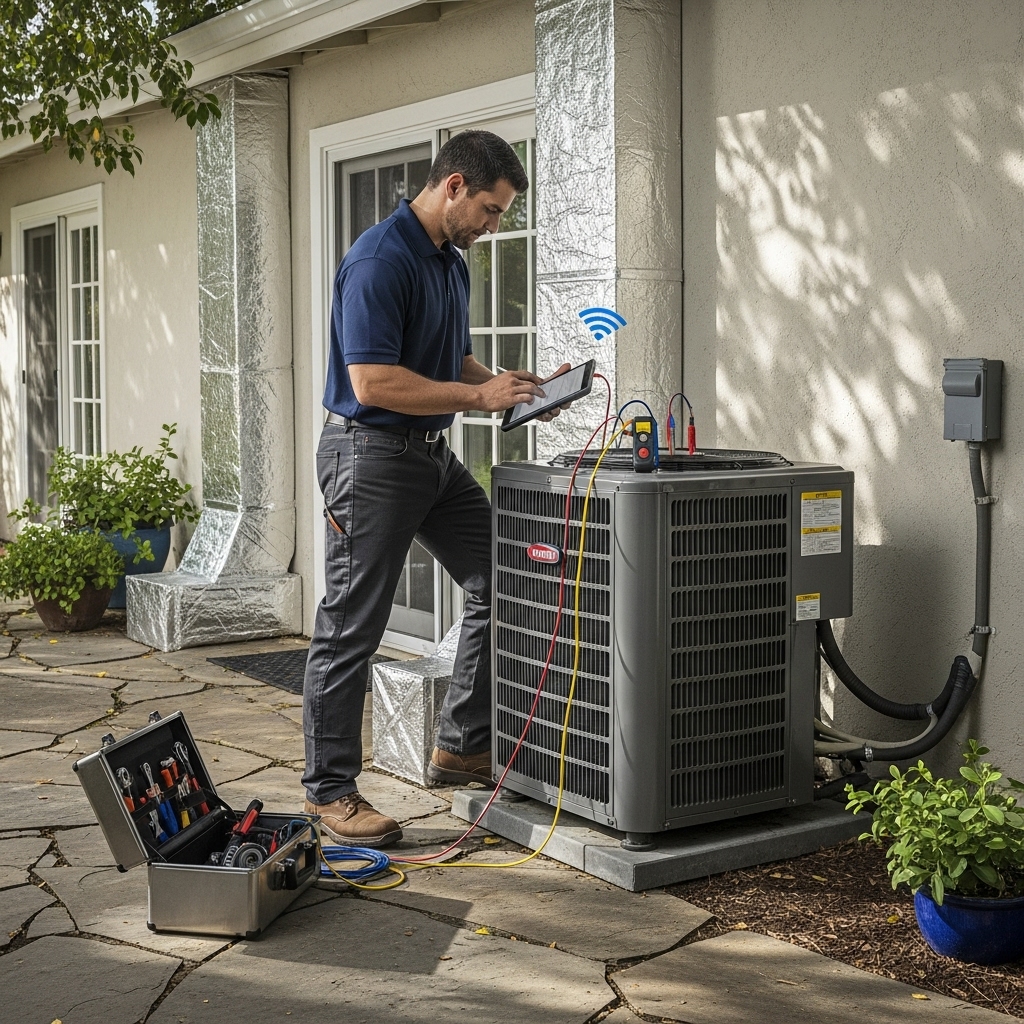
One of the clearest trends is the rise of app-enabled diagnostics that pair wireless gauges, temperature sensors, and airflow tools with sophisticated software. Instead of chasing symptoms, technicians can visualize system behavior in real time, overlaying pressures, superheat, subcooling, and temperature splits against performance targets. This matters in Woodland Hills because ambient conditions are often extreme, and tools that normalize data for heat and sun exposure help separate normal high-load readings from true faults. The result is fewer guesswork part swaps and more precise repairs that restore design performance.
Protective components that buy time in extreme heat
Repairs increasingly include protective upgrades that help equipment ride out punishing hours. Hard-start kits matched to compressor specs, new contactors with sealed housings that resist dust, and UV-resistant fan blade replacements for condensers that bake in afternoon sun are becoming common. In homes where voltage can sag during peak demand, technicians may recommend checks of wire sizing and connections to reduce voltage drop, a quiet repair that pays off when the system tries to start at 5 p.m. with the slab radiating heat into the evening.
Coil care evolves beyond a quick rinse
Outdoor condensers used to get a quick hose-down; now coil cleaning is more nuanced. Technicians use foaming cleaners appropriate for microchannel or fin-and-tube designs, straighten fins where feasible, and clear debris from the base pan to improve drainage and airflow. In dusty corners of Woodland Hills where wind funnels between homes, coil fouling happens faster, and careful cleaning paired with fan motor checks restores head pressure to a safe range. Indoors, evaporator coil hygiene matters more than ever, with biofilm removal and drain pan sanitation preventing odors and clogs that would otherwise show up during late-summer marathons.
A focus on airflow as the foundation of repair
Another trend is the recognition that proper airflow is the foundation for every other repair. Before swapping parts, technicians measure static pressure, assess duct sizing, and verify that the blower is actually delivering what the system expects. In older Valley homes with mixed duct runs and add-on rooms, this is crucial. Repairs may include sealing return leaks that pull hot attic air, balancing supply registers, and correcting blower speeds to match available duct capacity. These airflow-centered repairs are often the difference between a fix that “sort of helps” and one that transforms daily comfort.
Inverter and variable-speed systems change the repair playbook
Variable-speed and inverter-driven systems are more common around Woodland Hills, especially in larger homes that need steady comfort. They bring superb efficiency and quiet operation, but they also demand a different repair skill set. Technicians now carry diagnostic tools for communicating with control boards, interpret fault codes that reference sensor networks, and verify that modulation ranges are being used effectively. Repairs might involve replacing a sensor that is shifting load calculations or updating firmware so defrost or low-speed cooling behaves properly during shoulder-season days.
Mini-splits show up in add-ons and converted spaces
Garage conversions, ADUs, and home offices have accelerated the adoption of ductless mini-splits. Repair trends follow: line set leak checks focused on flare joints, careful condensate routing inspections to prevent wall staining, and coil cleanings that restore heat exchange in compact indoor heads. Because these systems often serve high-use spaces like offices and studios, timely repairs have an outsized impact on the everyday comfort of work-from-home households.
Indoor air quality as a repair outcome, not just an add-on
Wildfire seasons have pushed IAQ to the center of repair conversations. Instead of treating filtration as a separate topic, technicians weave it into the repair plan. When return air leaks are sealed as part of a fix, when filter racks are adjusted to ensure tight fit, and when coils are cleaned thoroughly, indoor air quality improves as a direct result. In homes close to canyon pathways where smoke can ride the wind, these repairs turn the AC system into an effective shield during bad air days.
Refrigerant practices shaped by new standards
Repair approaches are adapting to evolving refrigerants and regulations. Accurate charging methods, leak detection with sensitive instruments, and meticulous brazing or flaring practices make a measurable difference in performance and reliability. In Woodland Hills, where systems work near their limits for long stretches, correct refrigerant mass and cleanliness are the difference between a compressor that runs hot and one that hums along inside its comfort zone. Technicians increasingly document readings digitally, so future repairs can compare apples to apples across seasons.
Parts logistics get smarter
Supply dynamics have encouraged technicians to stock high-failure items that match local equipment mixes: capacitors rated for higher ambient temps, contactors with dust-resistant enclosures, and common ECM blower modules. The trend is toward one-visit repairs. When a part must be ordered, you will see clearer timelines and temporary measures—like adjusted fan speeds to protect coils—that keep the system safe until the fix is complete. In Woodland Hills, where a day or two without AC can feel like a week, this emphasis on readiness matters.
Thermostat and zoning tweaks as part of the repair
Modern repairs often include small control adjustments. A thermostat set to an aggressive recovery schedule might be recalibrated to avoid running the system at its harshest speed right at the hottest hour. In zoned homes, damper checks ensure that one zone’s call for cooling does not starve another of airflow. These subtle corrections, informed by how the home actually behaves, are becoming standard components of a good repair visit.
Homeowner education elevated
Another trend is better communication. Technicians now arrive with photos and data to explain what they found and why a repair matters. You might see a before-and-after static pressure reading or images of a matted coil that visibly illustrate performance gains. This clarity helps homeowners in Woodland Hills make decisions quickly during heat events and supports smarter maintenance between visits.
Resilience planning for late-season heat waves
Because September and October can deliver the year’s hottest days, repair strategies increasingly include resilience planning. That might look like verifying that the outdoor unit has proper clearance for airflow, recommending light shading that does not impede service, or confirming that drain safeties are tested before monsoonal moisture arrives. The aim is to prepare for the period most likely to challenge the system so that comfort holds without drama.
Mid-season tune-and-repair blends
Mid-season visits now blend maintenance tasks and repairs into one appointment. Rather than declaring a strict line between “tune-up” and “repair,” technicians prioritize changes that will have the biggest impact on performance for the weeks ahead. In Woodland Hills, this pragmatic approach acknowledges the unforgiving nature of local heat and the practical need to keep systems at their best throughout the long season.
What this means for your next service call
When you schedule AC service, expect a visit that looks more like performance optimization than a single fix. You will see instruments that quantify how your system breathes and rejects heat. You will hear recommendations that tie airflow, refrigerant charge, and electrical health together as a single story. And you will notice the result: faster cool-downs, steadier temperatures, and a quieter, more confident cycle. If you are choosing who to call, browsing a reputable source for keyword can help you benchmark whether a provider embraces these modern practices.
Neighborhood specifics that inform repair
In the flats near Victory, dust and light soils accumulate quickly on outdoor units placed near landscaping. Around the foothills, steep lots sometimes mean condensers are tucked into alcoves that limit airflow; technicians now bring solutions that gently redirect exhaust away from walls without restricting service access. Homes with additions created over time often feature a patchwork of ducts; repair trends in those spaces emphasize sealing and balancing so that a fix in one room does not generate discomfort in another.
Quiet is a performance metric now
Noise used to be a cosmetic issue. Today, it is considered a performance metric because excess noise often accompanies vibration, misalignment, or motors working harder than they should. Repairs that reduce noise—replacing failing bearings, securing panels, aligning fan blades—do more than make the backyard pleasant. They reduce mechanical stress and contribute directly to longevity.
Repairs that speak the language of comfort
Ultimately, the trend is toward repair that speaks the language homeowners care about: cool rooms in late afternoon, bedrooms that hold a steady temperature at night, and indoor air that feels clean even when outside air goes sideways. Data and tools matter because they support those outcomes. New parts matter because they perform reliably under Woodland Hills conditions. And communication matters because it turns a technical fix into confidence you can feel when you walk from the kitchen to the den and the temperature simply feels right.
Frequently Asked Questions
What should I expect from a modern AC repair visit?
Expect data-backed diagnostics, clear explanations, attention to airflow, and repairs that look beyond the single failed part to address contributing conditions. You should see measurements before and after that confirm improvement.
Are inverter and variable-speed systems harder to repair?
They require different tools and training, but a prepared technician can diagnose them efficiently. Repairs may involve sensors and control boards in addition to traditional components, with testing procedures tailored to modulation behavior.
How do technicians protect systems during extreme heat?
They verify electrical health, clean coils thoroughly, confirm airflow, and may recommend protective components like matched hard-start kits. The goal is to keep the compressor and motors within safe operating ranges even during hot, late-afternoon runs.
Can repair improve indoor air quality without adding new equipment?
Yes. Sealing returns, improving filter fit, cleaning coils, and correcting airflow all reduce dust and smoke intrusion. Many repair plans now treat these steps as part of restoring overall system performance.
What is different about coil cleaning today?
Technicians select cleaners based on coil type, protect surrounding materials, and pay attention to base pan drainage and fin straightness. The aim is to restore heat exchange without damaging delicate coil designs.
How fast should a good repair show results?
Often immediately. You should notice stronger, cooler airflow, faster pull-down, and steadier temperatures within the first few cycles after a repair, with quieter operation as a common bonus.
How do I choose a repair provider aligned with these trends?
Look for clear, data-supported assessments, an emphasis on airflow, familiarity with variable-speed equipment, and a willingness to explain findings. These are markers of a modern, results-focused approach.
Ready to experience modern AC repair?
If your system feels a step behind the heat or your home never quite settles in late afternoon, it may be time to schedule a visit that reflects today’s best practices. Reach out through a trusted local hub for keyword, and enjoy the confidence that comes with a system tuned for Woodland Hills’ unique climate.