
Every homeowner in Woodland Hills eventually encounters an AC issue that shows up first as a small annoyance and then grows into a bigger frustration. Maybe the living room never quite cools down in late afternoon, or the system runs longer and louder than it did last year. In a climate where cooling is essential for much of the year, addressing common problems quickly keeps your home comfortable and prevents unpleasant surprises. The first step is recognizing symptoms and understanding how timely AC repair resolves root causes rather than just masking them.
Uneven Cooling and Warm Rooms
Uneven cooling is one of the most frequent complaints in two-story homes and larger single-story layouts. Rooms with long sun exposure, especially those facing west, collect heat late in the day. If ducts are slightly restricted, returns are undersized, or the blower is not moving enough air, those rooms will lag behind. Repairs in these cases often involve checking static pressure, ensuring the blower wheel is clean and turning freely, and correcting any kinks or low spots in flex duct. A careful balance can restore comfort without invasive work, and the difference is immediate when the upstairs feels as cool as the downstairs even at 6 p.m.
Short Cycling and Long Runtimes
Short cycling—when the system turns on and off rapidly—is hard on equipment and almost always a sign that something is off. It can be caused by a miscalibrated thermostat, a dirty coil, or a refrigerant issue. Long runtimes, on the other hand, can point to airflow problems, dirty condensers, or undersized returns. The good news is that these issues are measurable. Technicians can check temperature splits, verify charge, and measure airflow to identify the culprit. When corrected, you not only regain comfort but also reduce wear and tear on major components.
Noises, Vibrations, and New Smells
Changes in sound or smell are the system’s way of asking for attention. A buzzing at the outdoor unit often suggests an electrical component like a contactor is failing. A rattling panel or whine from the air handler may indicate loose fasteners or a motor bearing wearing out. Musty odors can signal a clogged drain or microbial growth near the evaporator coil. Repairs here range from simple adjustments and cleanings to replacements of aging parts. The payoff is not only a quieter home but also better airflow and more dependable operation.
Water Around the Air Handler
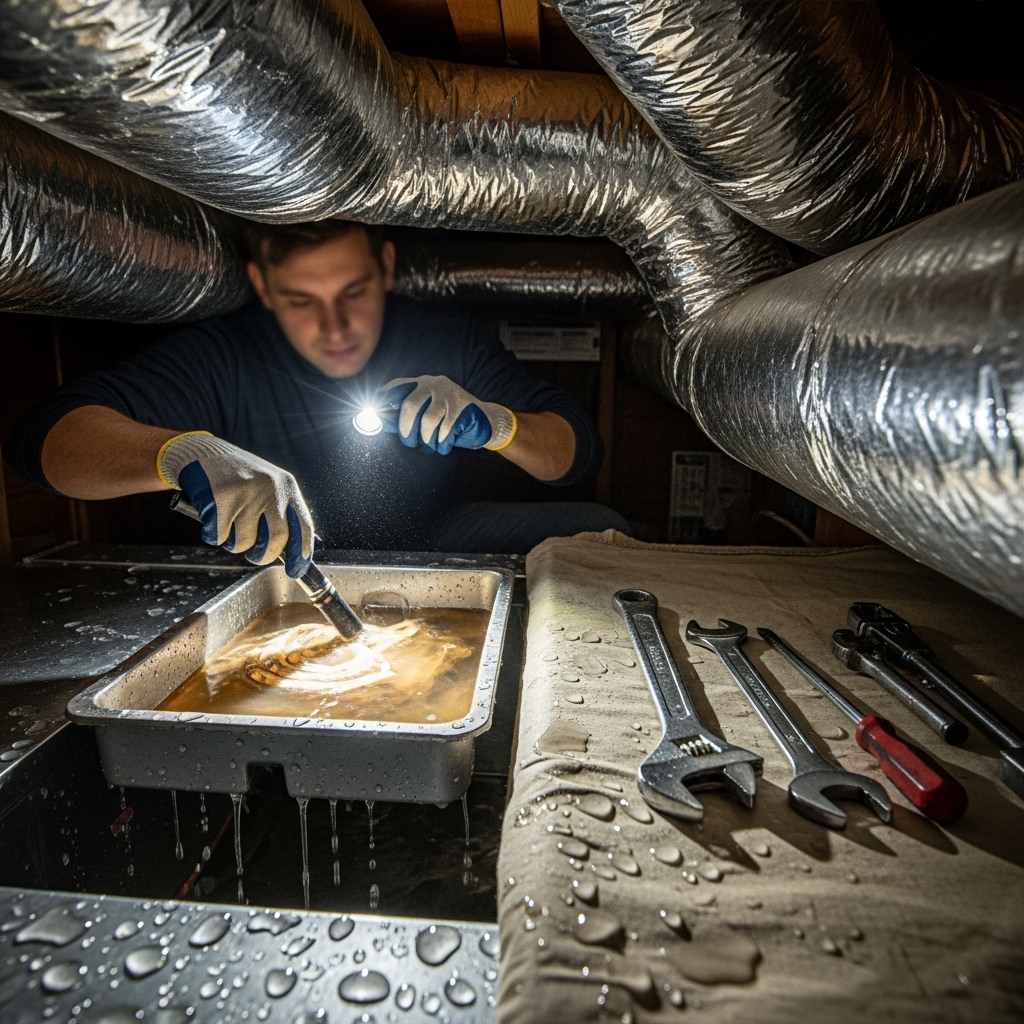
Water where it does not belong usually means a clogged condensate drain or a drain pan issue. In humid spells or during long runtimes, condensate production increases, and any restriction in the drain line can cause overflow. A professional will clear the line, confirm proper slope, and often recommend a float switch that shuts the system down before water can spill. This is a classic example of how a quick repair prevents bigger issues like ceiling damage or microbial growth.
Low Airflow and Weak Vents
Low airflow can make a system feel weak even when it is otherwise healthy. Filters loaded with dust, return grilles that are blocked by furniture, and coils coated with fine particulates are common culprits. Repairs include cleaning, adjusting fan speed where appropriate, and checking that ducts are intact. In Woodland Hills, where attics get hot, duct insulation and routing matter too. Restoring airflow improves both comfort and efficiency, and it makes your system sound smoother because it is no longer straining to move air.
Thermostat Troubles
Modern thermostats do more than set a temperature. They coordinate stages, manage fan speed, and learn your schedule. When they are out of calibration or not configured correctly for the equipment, you will feel it as odd temperature swings or unexpected cycling. A repair visit that includes thermostat calibration or replacement can transform the feel of your home. Smoother ramps to setpoint, better evening comfort, and steadier overnight temperatures are all signs that controls and equipment are finally in sync.
Outdoor Unit Stress From Local Conditions
Santa Ana winds, dry spells, and backyard landscaping all affect the condenser. Dust builds on the coil fins, while shrubs and fences can choke off airflow. In peak season, head pressure rises quickly when the unit cannot breathe. Cleaning the coil carefully, straightening bent fins, and clearing space around the unit restore heat rejection capacity. When this is paired with a check of electrical components—which also run hotter under stress—you regain performance and reduce the chance of a sudden failure.
Refrigerant Issues and Why Precision Matters
Low refrigerant is a symptom, not a fix. The trend in quality repairs is to find the leak, correct it, and charge the system to manufacturer specifications with a scale and target subcooling or superheat. This precision protects the compressor and improves cooling on the hottest afternoons. In our climate, where equipment runs long hours, a stable charge is one of the best protections against future trouble.
When a Simple Fix Makes a Big Difference
Some of the most satisfying repairs are also the fastest. Replacing a weak capacitor can restore confident compressor starts. Tightening a loose wire can stop intermittent shutdowns. Adjusting a blower speed can eliminate that hollow, struggling sound at the vents. These are not band-aids; they are targeted corrections that return the system to its intended operating window.
If you are noticing changes in the way your system runs, reach out for professional AC repair before the next heat spike. Catching the issue early minimizes the chance of multiple components being stressed at once and keeps your home cool without drama.
FAQ
Why does my AC run but not cool well in late afternoon?
Late-day heat adds load to rooms and ducts, especially in attics. If airflow is restricted or the outdoor coil is dirty, the system cannot shed heat quickly enough. Cleaning coils, correcting airflow, and checking charge usually restore strong performance.
What causes water to drip from the air handler?
A clogged condensate drain or a cracked drain pan are common causes. Clearing the line and adding a float switch prevent future overflows. Addressing the issue quickly protects ceilings and reduces musty odors.
Should I worry about a buzzing sound at the outdoor unit?
Yes. Buzzing can indicate a failing contactor or capacitor. These parts are relatively straightforward to replace, and doing so promptly prevents stress on the compressor and avoids sudden outages.
Can duct issues be fixed without replacing everything?
Often, yes. Sealing joints, correcting sagging sections, and balancing dampers can improve airflow significantly. A full replacement is not always necessary to solve comfort problems.
Is my thermostat part of the problem?
It can be. A misconfigured or failing thermostat leads to odd cycling and temperature swings. Calibrating or replacing it to match your equipment can smooth out performance and improve comfort quickly.
Get Your Home Back to Comfortable
If any of these issues sound familiar, schedule expert AC repair today. A focused visit will resolve the root cause, restore calm, even cooling, and keep your Woodland Hills home ready for the hottest hours.