
AC Not Keeping Up? Woodland Hills Experts Bring the Cool Back Fast
There’s a special kind of summer in Woodland Hills—the kind where late afternoons glow and the heat lingers into the evening. When your AC starts to fall behind on those days, the house doesn’t just feel warm; it feels stalled. Getting back to comfortable is about more than swapping a part; it’s about diagnosing the entire system under Valley conditions and fixing what truly matters. If your indoor temperature creeps up or the outdoor unit sounds different than usual, it’s time to lean on nearby pros who know our neighborhoods and our weather. For fast, dependable results, many homeowners turn to local HVAC repair that’s specifically geared for Woodland Hills homes and their unique demands.
Cooling equipment in our area works hard. Attic air handlers battle high ambient temperatures, condensers sit in narrow side yards that restrict airflow, and dust from dry spells finds its way into coils and filters. A system that seemed fine in June can stumble by late July because small inefficiencies finally reach a tipping point. That’s why thorough diagnostics—measuring pressures, temperatures, and electrical performance—matter so much. They reveal whether you’re dealing with a simple electrical component failure, a refrigerant-side issue, or an airflow constraint that has been hiding in plain sight.
How AC Issues Reveal Themselves in Woodland Hills Homes
Uneven cooling is one of the most common complaints. Rooms on the west side warm up late in the day, upstairs spaces lag, and family rooms never quite feel crisp. While the thermostat offers a single number, the real story is how air moves and how heat accumulates across your rooms. Duct design and condition play starring roles. If returns are undersized or supply runs are long and sagging, the blower works harder but delivers less. The outdoor unit may be fine, but the system can’t move enough conditioned air to the rooms that need it most. The fix then isn’t just a part—it’s a targeted airflow strategy that restores balance quickly.
Noises tell tales too. A condenser fan that struggles to start, a hum from the outdoor cabinet, or a chattering sound when cooling calls for action all point to electrical components approaching failure. Inside, if you hear the blower spin up and down more than it should, the system may be short cycling due to charge or airflow issues. Addressing these clues early keeps a straightforward repair from cascading into a larger one.
Diagnostics Done Right: The Backbone of a Lasting Fix
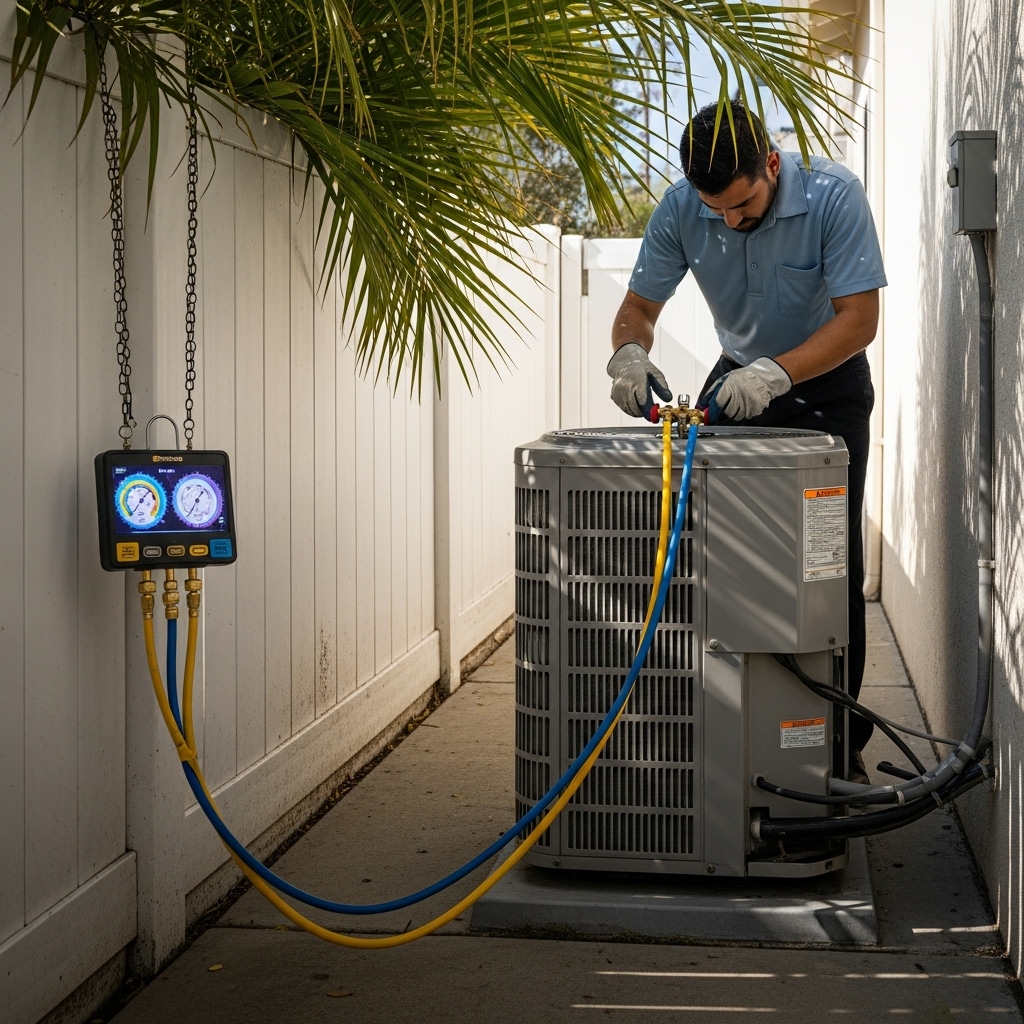
A capable technician begins with observation and measurement. Outdoor coils are inspected for debris and buildup, indoor coils for cleanliness and proper drainage, and filters for condition. Pressures, superheat, and subcooling readings confirm refrigerant health, while voltage and capacitance tests confirm electrical integrity. The aim is to align what the numbers say with what you feel in the home. If the back bedrooms never cool properly, a reputable pro correlates that with duct performance and room airflow, not just equipment specs.
In Woodland Hills, ambient conditions during testing are unique. Attics might remain warm late into the night, influencing how coils perform and how quickly condensation forms. Technicians who work here account for those variables when interpreting readings, ensuring their fixes hold in the real world—not just in a manual.
Cleaning, Clearing, and Correcting: Small Steps with Big Payoffs
Many AC struggles trace back to cleanliness and airflow. An outdoor coil rinsed of dust and lint can shed heat far better, allowing the compressor to work less for the same cooling result. Indoors, a clean evaporator coil and a free-flowing condensate path prevent icing and water issues that sap performance. Filters do their part, but if returns are too small or blocked by furniture, even a brand-new filter won’t save the day. Your technician may suggest rearranging a return grille or opening a path that was unintentionally covered by décor. These aren’t cosmetic quibbles—they’re changes that give your system the air it needs to do its job.
Electrical corrections matter too. Replacing a weak capacitor or a pitted contactor restores the muscle your motors need to start crisply and run smoothly. It’s common for these components to wear during the long, hot months, and catching them before they fail outright prevents surprise outages.
Refrigerant Realities and Why Accuracy Matters
Refrigerant charge is where precision pays off. Too little charge and the system struggles to absorb heat at the coil; too much and efficiency drops while the compressor works harder than necessary. If a leak is suspected, a careful technician will test methodically to locate and confirm it, then discuss the most sensible path forward. In older systems, the conversation may include the type of refrigerant, availability considerations, and what makes sense for your home plans. The goal is to return reliable cooling today while keeping future options open.
It’s tempting to view refrigerant as a “top off and go” situation, but that approach ignores the science of heat transfer. Correct charge paired with proper airflow is what delivers that crisp, even cooling you’re after, especially during late-afternoon heat spikes.
Home Layout and Access: Why It Changes the Plan
The architecture of your home affects how repairs unfold. Air handlers in compact closets or tucked behind attic trusses take extra care to access and service. Outdoor units wedged beside fences may need temporary clearance to breathe freely. None of this is unusual in Woodland Hills; it’s just part of working in lived-in homes with character. A thoughtful technician explains the plan, protects surfaces, and moves intentionally. That’s how you get a thorough repair without disruption.
Homes with additions often inherit ductwork that was extended rather than redesigned. If a new room never cools well, it’s not necessarily the equipment’s fault; the path the air must travel may be the constraint. In those cases, the repair conversation might include simple adjustments now and a more comprehensive airflow plan when timing is right.
Why Local Pros Are Faster and More Precise
Nearby teams know which supply houses stock certain contactors, which attic layouts require extra staging, and how to plan appointments around heat to keep technicians safe and efficient. That experience shows up as shorter downtime and repairs that stick. It’s also about communication. A local expert will tell you what’s happening in plain language, share photos or readings, and invite your questions. Clarity builds trust, and trust lets you move through the process without second-guessing every step.
Scheduling matters too. When you can get help quickly, you avoid the cycle where a minor issue becomes a major one. Early morning or evening slots in hot weather often deliver better working conditions for attic tasks, which can shave time and improve outcomes.
Mid-Season Save: Getting Back to Cool Without Delay
When your AC slips in the middle of a heat stretch, the priority is swift stabilization. A capable tech will restore core function first—ensuring the outdoor unit is starting correctly, the indoor coil is draining, and airflow is adequate—then address secondary optimizations that deepen comfort. This is where a dependable partner for HVAC repair shines: they’ll fix what’s urgent today and map a plan for anything else that would meaningfully lift performance without disrupting your schedule.
After the repair, you’ll likely notice the difference immediately. Air feels cooler at the registers, runtimes smooth out, and rooms recover faster after doors open to the patio or driveway. That immediate relief is the sign that the fix addressed the true cause, not just the symptom.
Aftercare: Keeping the System on Track
Once your AC is humming again, a few simple habits keep it that way. Keep the area around the outdoor unit clear by a reasonable margin, change filters as recommended, and listen for changes in sound or performance. If a room starts to lag again, call sooner rather than later; small shifts are much easier to correct than entrenched issues. In a climate like ours, where heat loads are predictable and intense, a bit of vigilance pays back handsomely in uptime and comfort.
Consider a follow-up performance check before the hottest month. Verifying charge, ensuring drains are clear, and confirming that airflow is still on target reduces surprises during the peak. It’s about positioning your system for success in the environment it actually faces.
FAQ
Q: My AC runs but the house still feels warm. What’s likely going on? A: You may have an airflow constraint, a refrigerant charge issue, or an outdoor coil that’s dirty. Measurements and inspection will pinpoint the true cause quickly.
Q: The outdoor unit hums loudly at startup. Should I be concerned? A: That often points to a weak capacitor or a stressed contactor. Addressing it promptly protects the compressor and restores smooth starts.
Q: Why are upstairs rooms always warmer in the afternoon? A: Heat rises and sun exposure stacks the load. Duct design and return placement can compound the effect. Targeted airflow improvements usually bring those rooms back in line.
Q: Can cleaning really make a big difference? A: Absolutely. Clean coils and clear drains improve heat transfer and system stability, which you’ll feel as cooler air and steadier runtimes.
Q: Do I need new equipment if refrigerant is low? A: Not automatically. The priority is finding and addressing the leak, then evaluating equipment condition and your home plans. Many systems deliver years of comfort after an accurate repair.
Q: Is it normal for condensate safety switches to stop cooling? A: Yes, they’re designed to protect from water damage. Clearing the blockage and verifying proper slope and trap function restores normal operation.
Q: How quickly can cooling usually be restored? A: Many issues are resolved the same day, especially electrical component failures or drain problems. More complex fixes may require a follow-up when specific parts are needed.
Q: Do smart thermostats fix uneven cooling? A: They help with scheduling and awareness, but the foundation is proper airflow and charge. Once the system is tuned, smart controls add polish and convenience.
If your AC isn’t keeping up or you want a second opinion before the next heatwave hits, choose a nearby team that pairs careful diagnostics with clear communication. To bring back crisp, even cooling and keep it that way, schedule professional HVAC repair today and enjoy the relief of a home that simply feels right again.