
Heat Waves, Cold Snaps, and Peace of Mind: Emergency HVAC Repair in Woodland Hills, 24/7
When the mercury surges in Woodland Hills, the difference between a cool, livable home and a long, sweaty night can come down to how fast help arrives. The same goes for unexpected chilly evenings when the heater won’t cooperate. Emergency HVAC isn’t just about speed; it’s about arriving prepared, diagnosing precisely, and stabilizing your home environment safely at any hour. If you’re staring at a thermostat that won’t budge or hearing a unit struggle at 10 p.m., it’s time to call a local team that lives and works in the Valley. For many households, that first call is to trusted, around-the-clock HVAC repair, because when comfort is on the line, the right expertise wins back the night.
Our part of the San Fernando Valley sees dramatic swings, and systems that breeze through May can falter in August when the load peaks. Dust from dry spells, leaves around condensers, and attic heat push equipment to its limits. Emergencies often happen at the worst possible time because that’s when small, hidden issues become big ones. Capacitors that were barely hanging on fail during startup surges. Contactors pit and stick after months of heavy use. A condensate drain that’s been quietly slow finally backs up, tripping safeties. The best emergency service knows these patterns and arrives ready to test, clean, repair, and, just as importantly, to communicate clearly so you know what’s happening and why.
What “Emergency” Really Means in the Woodland Hills Context
Not every HVAC issue is a crisis, but when inside temperatures climb or dip quickly—especially with young children, older family members, or sensitive pets at home—it becomes one. Emergency calls center on restoring safe, livable conditions fast and stabilizing equipment to prevent cascading failures. In practice, that can mean replacing an outdoor capacitor in the field, confirming proper refrigerant charge under load, or clearing a condensate trap that risked water damage. It can also mean safely shutting down a system that presents a hazard, explaining the findings, and outlining the fastest path to a full fix.
Local knowledge speeds things up. A tech who knows Woodland Hills neighborhoods understands typical attic layouts, which streets have older ranch-style homes with limited returns, and which remodels tend to put air handlers in tight closets. That familiarity reduces time spent hunting for access and increases time spent making meaningful repairs. It also informs realistic expectations: some late-night repairs can be completed fully, while others are stabilized for the night with a return visit scheduled when parts counters open.
How Pros Triage an After-Hours Call
The first step is listening. A clear description of symptoms—no cooling or heating, new noises, breaker trips, water around the indoor unit—guides what tools and parts go in first from the truck. On arrival, the technician checks power, control signals, and system safeties. For cooling emergencies, outdoor units get attention quickly: confirming condenser fan operation, testing capacitors, ensuring the contactor is operating, and verifying that airflow is unobstructed. For heating calls, the sequence of operations is tested: inducer, ignition, flame sensing, and blower performance. Every step is about swiftly isolating the root cause, not just swapping what looks suspect.
Communication is just as vital. A good emergency visit includes a simple explanation of findings and immediate options. If the equipment can be restored completely, great; if not, you’ll know exactly what’s needed and when comfort will be fully back to normal. That clarity reduces stress in the middle of the night, and it prevents surprises the next day.
Working Safely in Attics and Tight Spaces
Emergency repairs in Woodland Hills often mean navigating attics that are still warm late into the evening. Safety and care are paramount: walking boards, lighting, and protective gear are essential. In these conditions, technicians move deliberately, because careful work reduces the chance of collateral issues. For you, this means the work may look methodical rather than rushed, even when the goal is speed. Precision beats haste. Well-trained techs understand how to balance urgency with craftsmanship, ensuring that a midnight save is just as solid as a midday tune.
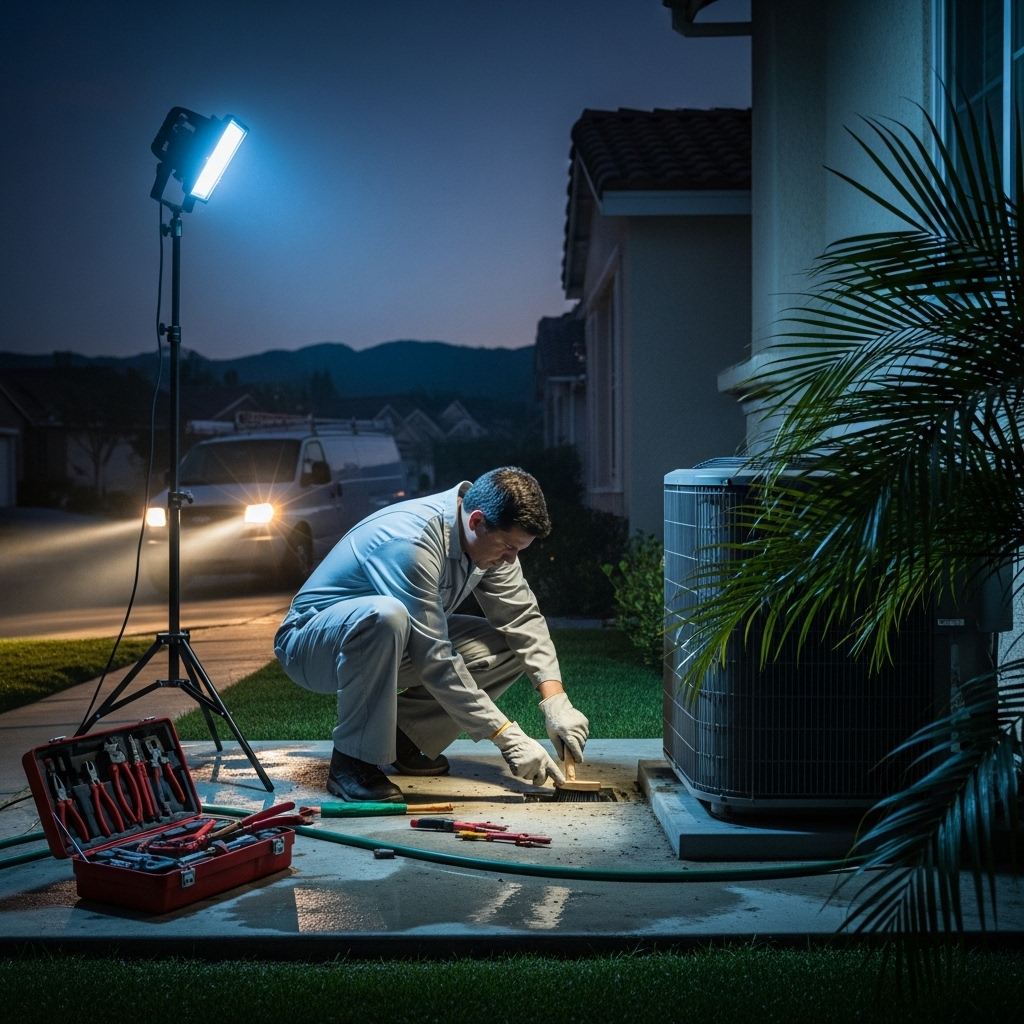
For outdoor units, nighttime work includes attention to lighting and clearances around the condenser. Debris is carefully cleared, electrical components are tested with insulated tools, and any temporary covers or weather protections are re-secured before leaving. The goal is a stable, safe system that can run through the night and into the next day.
When Parts Are Needed: Temporary Stabilization Done Right
Sometimes the part you need isn’t on the truck, and counters are closed. That’s when temporary measures matter. A professional may adjust fan speeds to enhance airflow, set the system to a mode that reduces strain, or isolate a failing accessory so core heating or cooling can operate safely. With condensate issues, clearing the primary drain and ensuring the float switch is operational can prevent water damage while a permanent solution is arranged. When these measures are used, they’re explained clearly, and you’ll know the plan for finalizing the repair as soon as parts are available.
It’s worth noting that good temporary work requires excellent diagnostics. Without understanding the true cause, stopgap steps can mask symptoms and risk repeat failures. The best emergency visits leave you with both comfort and confidence that the solution is headed in the right direction.
Preventing the Next Midnight Call
Once things are stable, a brief conversation about prevention pays off. If your system struggled during last year’s late-summer heat, small upgrades—return improvements, thorough coil cleaning, or calibrating charge—can reduce strain dramatically. If your home has hot or cold spots, airflow balancing makes the entire system run more evenly, shortening runtimes and easing component wear. In Woodland Hills, where attics run hot and dust can build quickly, these details matter more than they might in coastal climates.
Smart thermostats can help, but they’re not a cure-all. The real gains come from ensuring the equipment and ductwork are aligned with how your home is used. If you work from home and the office is a converted bedroom, for example, targeted airflow adjustments can make that space comfortable without overworking the system for the rest of the house.
Mid-Summer Realities: Why Heatwaves Expose Weak Links
During extended heatwaves, AC systems rarely get a break. The condenser fan and compressor team up for long hours, electrical components heat-soak, and small inefficiencies become big. That’s why capacitors and contactors feature so heavily in emergency calls. These parts live in the hottest place in the system and are responsible for the hardest part of the job: starting the motors and keeping them engaged. When they drift out of spec, you may hear humming, clicking, or see the fan struggle to start. Acting quickly prevents motor damage and keeps an easy fix from becoming a larger repair.
Refrigerant issues also surface under these conditions. Low charge due to a small leak can deliver marginal cooling in mild weather but will fall behind badly in triple-digit heat. A careful tech measures superheat and subcooling under real load conditions to determine whether charge is the issue or whether airflow is the real culprit. Correct diagnosis prevents chasing the wrong problem.
Clear Expectations During Overnight Service
Good emergency service sets expectations plainly. If your system can be restored fully right away, you’ll hear that. If the safest, smartest plan is to stabilize, cool or heat the home, and return with a specific part after sunrise, that will be explained too. You should expect courtesy, shoe covers or protective floor coverings, and a technician who tidies the work area before leaving. A small dose of professionalism goes a long way when the hour is late and stress is high.
Documentation matters even at midnight. Photos, readings, and notes create a repair trail that keeps the follow-up fast and focused. The next technician can pick up exactly where the overnight visit left off, avoiding repeated tests and delays.
Why Local Teams Excel at Emergency Calls
Proximity is power. A team based in or near Woodland Hills understands traffic patterns, knows the fastest routes at odd hours, and has working relationships with suppliers that open early. They also understand the architecture and retrofit history common in our area—from vaulted ceilings that complicate return paths to attic conversions with tight platforms. That familiarity compresses the time between doorbell and diagnosis, which is exactly what you want in an emergency.
There’s also accountability. Local companies rely on reputation. A late-night success story travels fast, and so does a misstep. That reality pushes teams to deliver at a high standard every time, because you’re not just a call on a board—you’re a neighbor.
FAQ
Q: What qualifies as an HVAC emergency? A: Loss of cooling or heating during extreme temperatures, water near the indoor unit, burning smells, electrical trips, or any safety concern with gas heating all merit urgent attention.
Q: Can most emergency AC repairs be handled the same night? A: Many can, especially capacitor, contactor, or drain-related issues. Some repairs that require specific parts may be stabilized overnight with final repairs completed the next day.
Q: How do I help the technician before they arrive? A: Provide clear symptom details, ensure access to the equipment, and keep pets safe in another room. If the breaker has tripped repeatedly, leave it off and share that information.
Q: Why does my system fail at night? A: Extended runtime during hot days creates heat-soaked components that finally give up in the evening. It’s a common pattern in the Valley during heatwaves.
Q: Will emergency work void warranties? A: Reputable technicians follow manufacturer procedures and document everything. In most cases, proper repairs protect warranties rather than jeopardize them.
Q: Are temporary fixes safe? A: When properly diagnosed and explained, temporary measures are designed to keep your home comfortable without risking the equipment. They are a bridge to the permanent solution.
Q: How can I prevent repeat emergencies? A: Address small issues early, keep coils and filters clean, verify proper charge and airflow, and schedule checks before peak heat or the coldest nights.
Q: Do smart thermostats help during emergencies? A: They help with control and alerts, but the foundation is sound equipment and ductwork. Smart controls are most effective when the system is tuned correctly.
If you’re facing an urgent comfort problem right now, don’t wait for morning to feel better. Call a neighborhood team that specializes in fast, precise, and respectful service. For dependable, around-the-clock relief, book emergency HVAC repair and rest easy knowing help is already on the way.